Blackjack is one of the easiest casino games to learn, but every decision can affect the result of your hand. You need to know when to take another card, when to keep your total, and how options such as doubling and splitting work.
This guide explains the blackjack rules for beginners step by step, including card values, payouts, player decisions, and the key rules to check before choosing an online game.
What Is the Objective of Blackjack?
Your objective is to beat the dealer without exceeding 21.
You win if your hand has a higher valid total, the dealer goes over 21, or you receive blackjack and the dealer does not.
You lose if your hand goes over 21. This is called going bust. You also lose if the dealer finishes with a higher valid total.
If both hands have the same value, the result is normally a push. Your original stake is returned. You do not need exactly 21. A total of 19 beats a dealer total of 18.
Blackjack Card Values
Blackjack uses standard playing cards. The suit and colour do not affect their value.
| Card | Value |
| 2 to 9 | Number shown |
| 10 | 10 |
| Jack, Queen, or King | 10 |
| Ace | 1 or 11 |
An ace counts as 1 or 11, depending on which value gives you the best valid total.
For example, an ace and a six can count as 7 or 17. If another card would cause a bust, the ace changes from 11 to 1. A hand with a flexible ace is called soft. A hand without one is called hard.
What Counts as Blackjack?
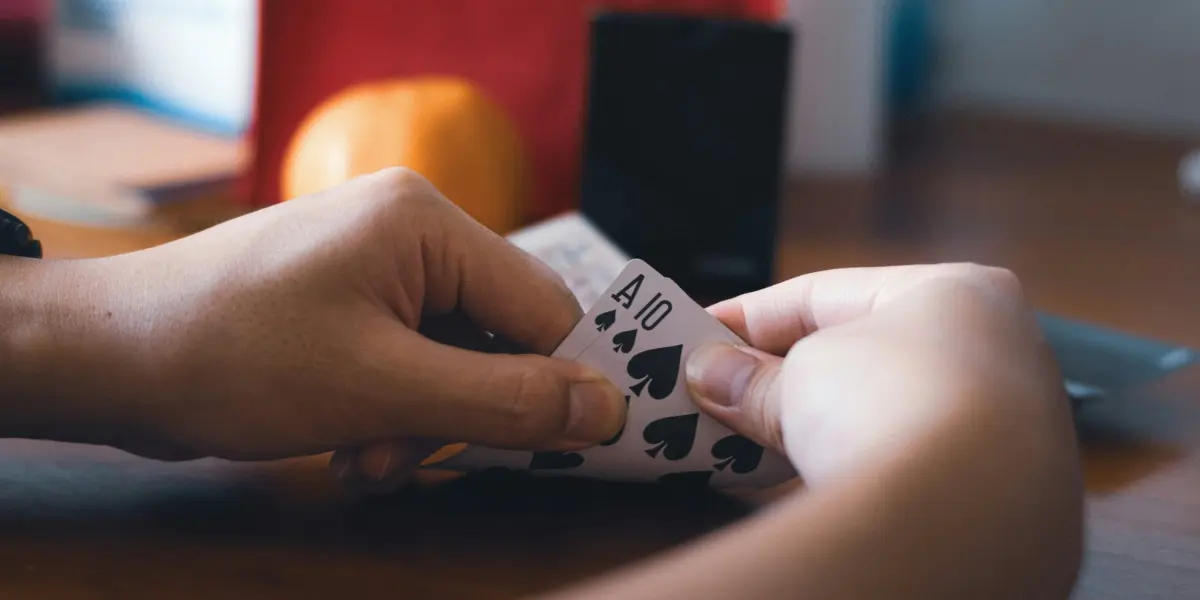
Blackjack is an ace and a ten-value card received as your first two cards. The second card may be a 10, Jack, Queen, or King.
It is stronger than reaching 21 with three or more cards. If both you and the dealer have blackjack, the result is normally a push.
The traditional payout is 3:2. A £10 stake provides £15 in winnings, plus your returned stake. Some games pay 6:5 or even money, which gives you less.
How a Round of Blackjack Works
A standard round follows six steps.
1. Place Your Stake
Choose your stake before the cards are dealt and keep it within your budget.
2. Receive Two Cards
Each player normally receives two cards face up. The dealer shows one card, called the upcard.
The dealer may also receive a face-down hole card. In some European-style games, it is drawn after all players finish.
3. Calculate Your Total
Add the values of your cards. Remember that an ace may count as 1 or 11.
If your first two cards are an ace and a ten-value card, you have blackjack. Otherwise, you must decide how to continue.
4. Choose an Action
You may choose to hit, stand, double down, or split. Some games also offer surrender. Your available choices depend on your cards and the table rules.
5. The Dealer Plays
After all players finish, the dealer reveals or draws the second card.
The dealer follows fixed instructions. Dealers normally hit on 16 or below and stand on 17 or above. Some games require the dealer to hit a soft 17.
6. Bets Are Settled
| Result | Outcome |
| Your total is higher | You normally win 1:1 |
| The dealer goes over 21 | You normally win 1:1 |
| You have blackjack | Usually paid 3:2 |
| Both totals are equal | Push; your stake is returned |
| The dealer has a higher total | You lose |
| You go over 21 | You lose immediately |
You lose as soon as your hand goes bust, even if the dealer later goes over 21. This rule is one reason the casino keeps a long-term advantage.
Main Blackjack Decisions
| Action | What it Means |
| Hit | Take another card |
| Stand | Keep your current total |
| Double down | Increase your stake and take one final card |
| Split | Turn a pair into two hands |
Hit
Choose hit when you want another card. The card is added to your total.
You may continue hitting until you stand or go over 21. Hitting can improve a low total, but it also increases the risk of going bust.
At a physical table, tap the table. Online, select Hit.
Stand
Choose stand when you want to keep your current total. Your turn ends, and you wait for the dealer to complete the hand.
At a physical table, wave horizontally. Online, select Stand.
Double Down
Doubling down means increasing your original stake and receiving exactly one more card. Your turn then ends.
This increases your possible return, but also the amount you can lose.
Some games allow doubling on any first two cards. Others restrict it to certain totals.
Split
You may be able to split when your first two cards have the same value.
You place a second stake equal to the first. The dealer separates the cards into two hands, and each receives another card. You then play each hand separately.
Special rules often apply to split aces. Many games give only one additional card to each ace. An ace and a ten-value card after a split normally count as 21 rather than blackjack. The game may also limit re-splitting or doubling after a split.
Insurance and Surrender
Insurance is an optional side bet offered when the dealer shows an ace. You may normally stake up to half your original bet.
If the dealer has blackjack, insurance usually pays 2:1. If not, you lose the insurance stake. Insurance is separate from your main hand and usually offers less favourable odds.
Surrender allows you to end the hand and lose half your original stake. It is normally available only after your first two cards. Not every game offers it.
Practical Blackjack Guidance for Beginners
Basic strategy uses your hand and the dealer’s upcard to identify the mathematically preferred action. It can reduce mistakes, but it cannot guarantee a win.
Useful starting points include:
- Consider splitting aces and eights.
- Do not split tens because 20 is already strong.
- Avoid insurance while learning.
- Check whether the dealer hits soft 17.
- Use a strategy chart matching the table rules.
- Prefer a 3:2 blackjack payout over 6:5.
- Learn the main game before trying side bets.
The correct strategy can change with the game rules.
How to Choose a Safer Online Blackjack Game
You should also check the casino and game before placing a stake.
Check the Casino Licence
Choose a casino with a valid licence from a recognised regulator. Confirm the licence on the regulator’s official site instead of relying only on a logo.
Read How to Check if an Online Casino Is Legitimate for more guidance on licences, ownership, payment security, and player protection.
Check How Results Are Produced
Standard online blackjack normally uses a random number generator. Live blackjack uses physical cards and a dealer shown by video.
Read What Is RNG in Online Casinos? to understand digital results. Online Casino Fairness: How Games Are Audited explains independent testing.
Read the Game Rules
Before playing, check:
- The blackjack payout
- The dealer’s action on soft 17
- When doubling is allowed
- Rules for splitting and split aces
- Whether surrender is available
- Minimum and maximum stakes
- Rules for side bets
Avoid games that do not clearly display these details.
Review the Betting Limits
Choose limits that fit your budget. A low minimum does not always mean good value. A 6:5 table may be less favourable than a 3:2 table.
Never use money needed for bills, savings, or essential costs. Use deposit limits, session reminders, and time-outs when the casino provides them.
Common Beginner Mistakes
Do not try to reach 21 on every hand. You only need to beat the dealer.
Do not copy the dealer’s actions. The dealer follows fixed rules and cannot split, double, or surrender.
Avoid side bets while learning. They may offer large payouts, but often give the casino a greater advantage.
Do not increase your stake to recover losses. Each hand is separate. Set a limit and stop when you reach it.
Conclusion
The blackjack rules for beginners are straightforward once you know the order of play. You receive two cards, calculate their value, check the dealer’s upcard, and choose an action.
Before playing online, review the payout, dealer rules, available actions, betting limits, casino licence, and game provider. Basic strategy can support better decisions, but it cannot remove the casino’s advantage.
Treat blackjack as entertainment, use a fixed budget, and stop when the game is no longer enjoyable.